
For living spaces we most often choose oak parquet (natural, warm, can be sanded) or quality vinyl (water-resistant, more affordable). For the kitchen, bathroom and entrance hall – ceramic tiles or porcelain stoneware, often in a large format. If you want a unified look throughout the home, vinyl or large-format tiles can run through all rooms without thresholds. The choice depends on your lifestyle (children, pets), underfloor heating and budget.
The floor is the largest surface in the home and one of the hardest to replace. That is why choosing it is an important decision – it sets the colour base, the acoustics, the feeling underfoot and even maintenance for years to come. Here is how we compare floorings when choosing them together with our clients.
| Flooring | Pros | Cons |
|---|---|---|
| Solid / engineered parquet | Natural wood, warm, can be sanded, long life | Sensitive to water and scratches |
| Laminate | Affordable, many decors, easy installation | Noisier, sensitive to water, can't be refinished |
| Vinyl (LVT / SPC) | Waterproof, quiet, warm, suitable for underfloor heating | Not a natural material |
| Tiles / porcelain stoneware | Extremely durable, waterproof, ideal with underfloor heating | Cold without heating, hard |
| Microcement | Jointless surface, modern look | Needs an experienced installer and care |
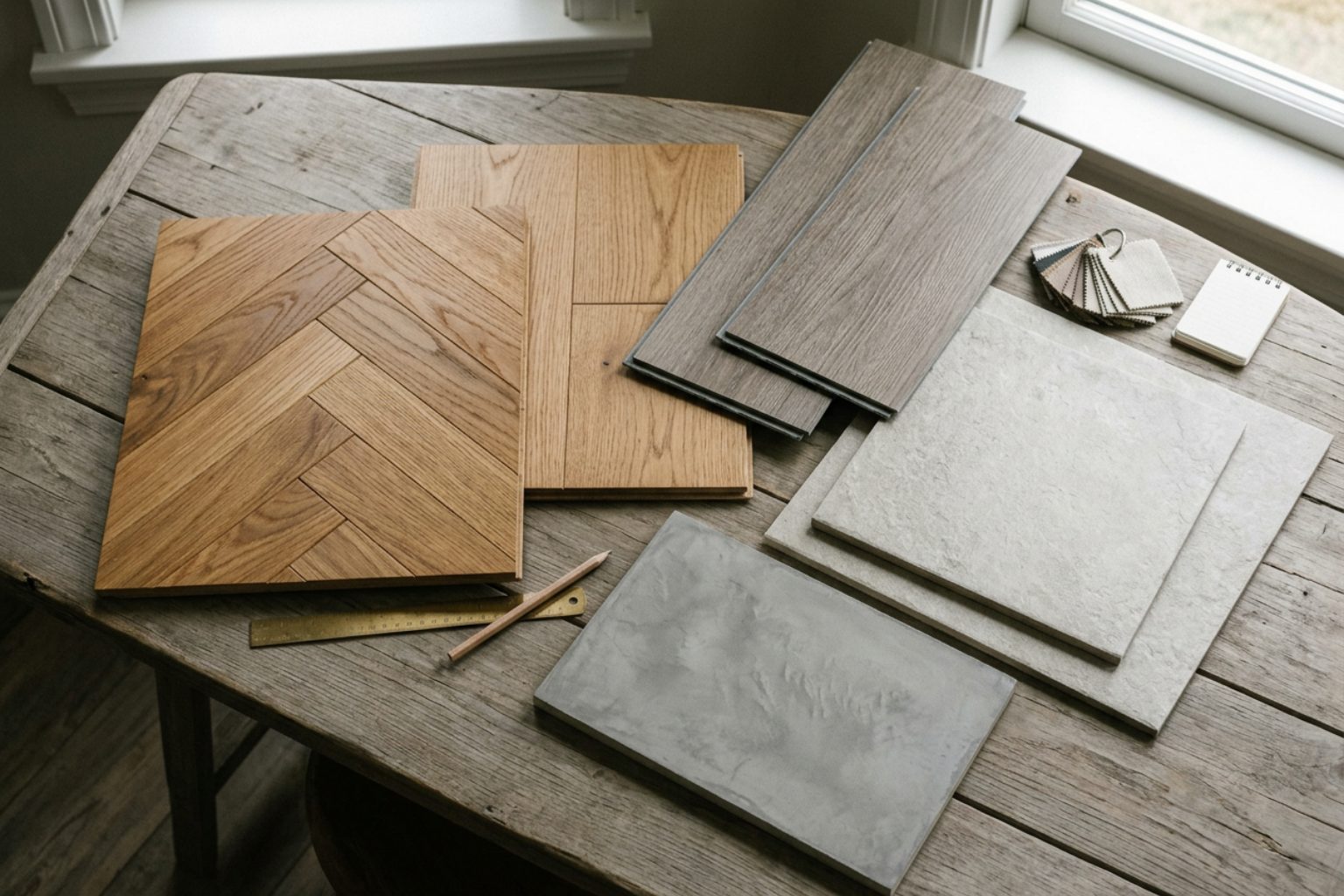
Engineered (three-layer) parquet is the most commonly used – the top layer is real wood (most often oak), and the base is stable and suitable for underfloor heating. Solid parquet is thicker and can be sanded more times, but it is more sensitive to moisture.
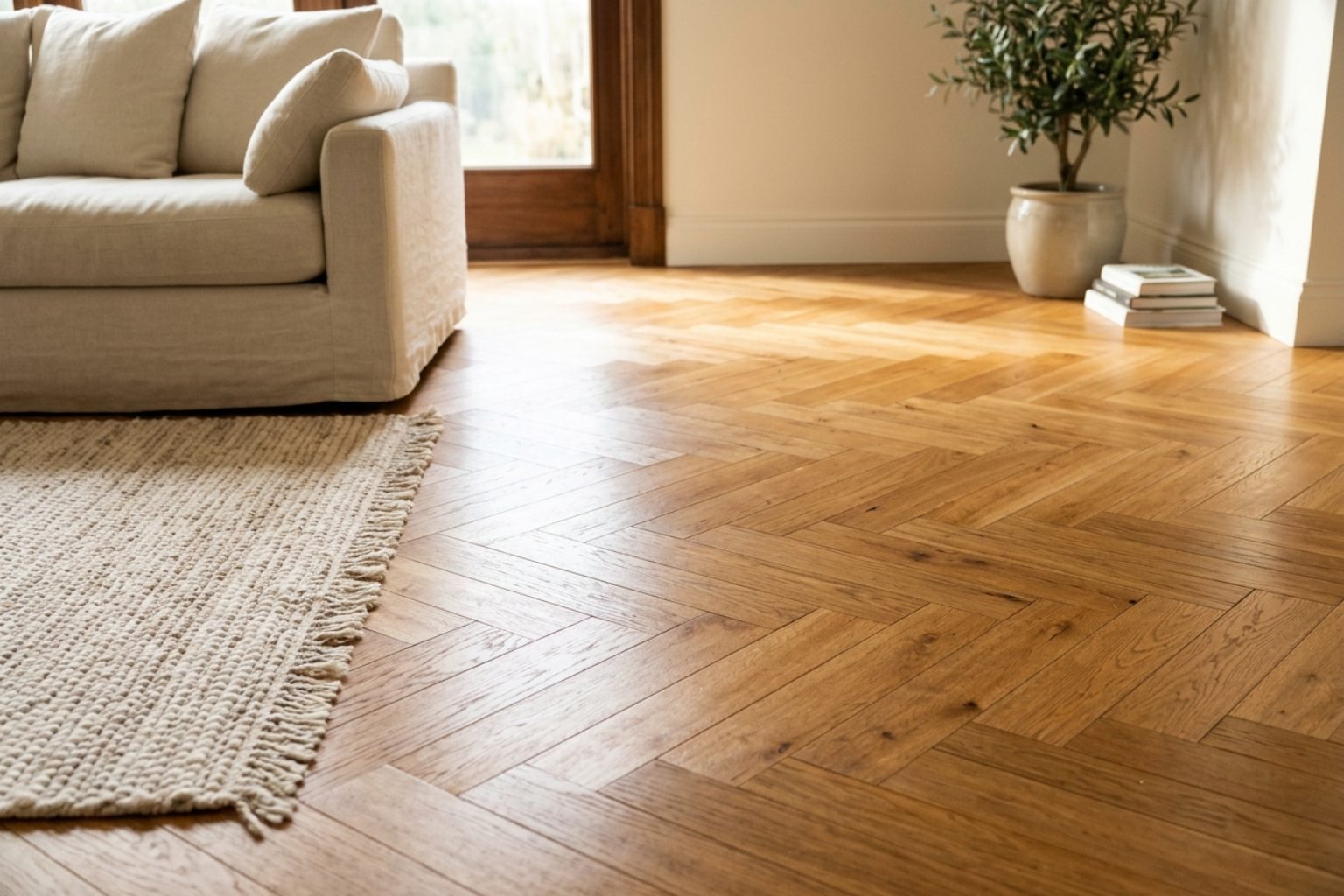
Modern laminate imitates wood very well and is scratch-resistant. It suits a more limited budget and rooms without moisture. Choose wear class AC4 or AC5 for a home and a good underlay for quieter footsteps.
Vinyl (LVT and rigid SPC) has become one of the most sought-after floors. It is waterproof, quiet, warm to the touch and suitable for underfloor heating. It can be laid in the kitchen and even the bathroom, allowing the same flooring throughout the home. Choose quality vinyl with a thick wear layer.
Porcelain stoneware is the most durable flooring – it doesn't scratch, doesn't absorb and lasts for decades. Large-format tiles (60×120, 120×120 cm and more) have few joints and make the space calmer and larger. They are ideal with underfloor heating.
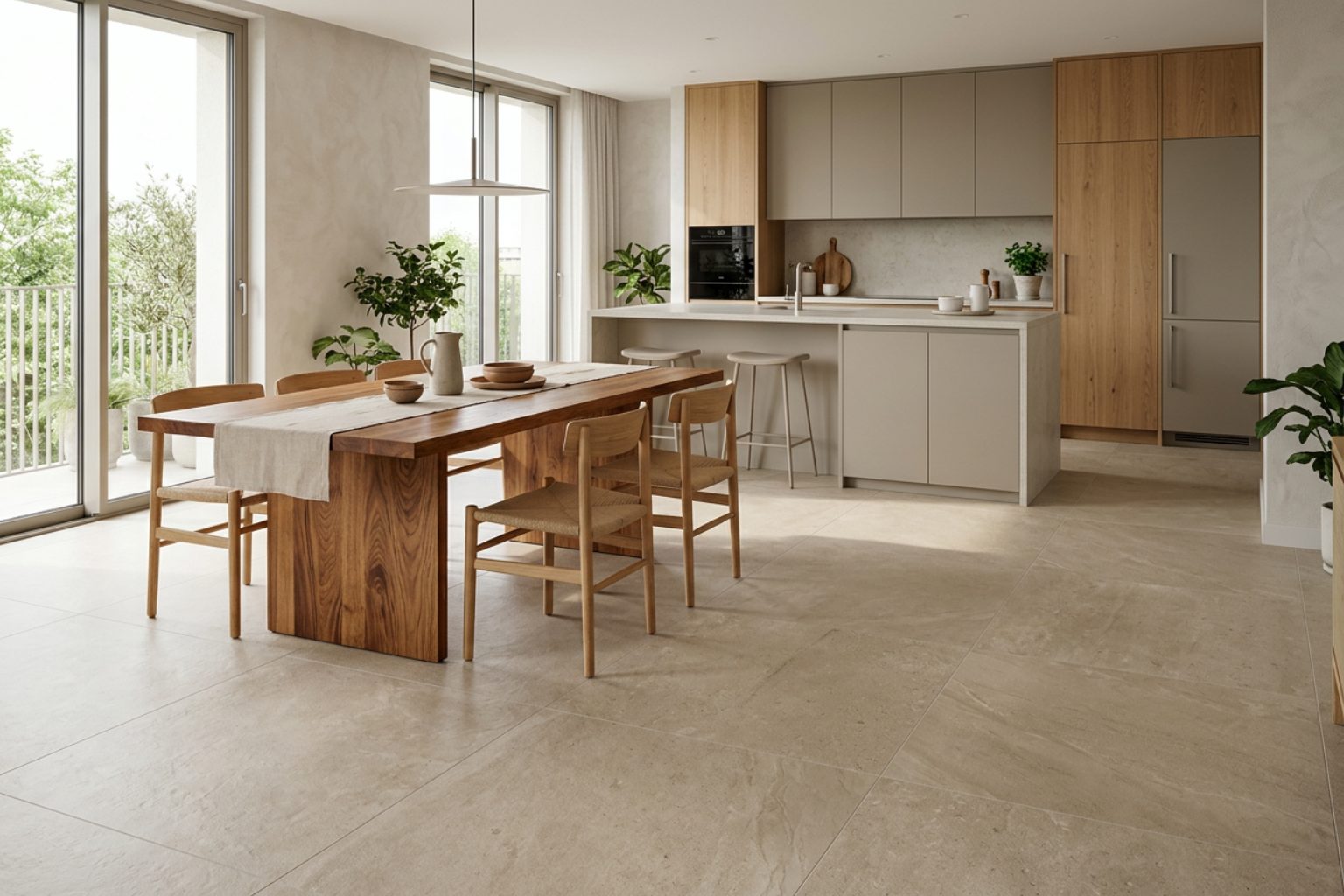
A thin jointless finish that can be applied to the floor, walls and even furniture. It gives a modern, monolithic look, but needs an experienced installer, a level base and a protective sealant.
More and more often we choose one flooring that runs through the whole apartment without thresholds. This makes the space bigger and more coherent. Vinyl and large-format tiles are suitable, or parquet with tiles only in the bathroom. Transitions are made with thin profiles, or without a profile if the floorings are at the same level – this is planned at the screed stage.
Choosing the flooring is part of the interior design project and must be decided before the screeds – see the right order of renovation stages.
“The floor is the backdrop to everything in the home. When it is chosen right, nobody notices it – everything just looks right.” – Arch. Katerina Taneva
Porcelain stoneware – it doesn't scratch, doesn't absorb water and lasts for decades. Of the “warm” floorings, quality vinyl is the most durable.
Yes, engineered three-layer parquet is suitable for underfloor heating, provided the manufacturer's temperature requirements are followed.
Vinyl is waterproof, quieter and suitable for kitchens, while laminate is more affordable but sensitive to water.
Medium warm wood tones are the most versatile – they don't show dust and scratches the way very light and very dark floors do.
At the end, once the screed is completely dry and the heavy works are finished.
Not sure which flooring is right for you? We will help you choose with samples at the showroom.
Book a consultation
 Renovation · 6 min readApartment renovation: the right order of stages – from design to moving in
The right order for an apartment renovation is: design → demolition → installations (electrical, plumbing, air conditioning) → plastering and screeds → bathroom and kitchen tiling →…
Read → Tips · 4 min readSmall apartment: 10 solutions that make it feel more spacious
A small apartment looks bigger when it is tidy, bright and visually calm. The most effective solutions are: a light, unified palette, built-in…
Read → Lighting · 4 min readHome lighting: how to plan the three layers of light
Good home lighting has three layers: ambient (even light across the room – hidden LED lines, recessed spotlights), task (where you cook,…
Read →