
Interior trends for 2027 move towards warmth and durability: earthy tones (chocolate, terracotta, olive), soft curved shapes, textured natural materials, sculptural stone islands, layered lighting, built-in custom furniture and spa-style bathrooms. What they have in common is that they make the home cosier and more personal, not just “modern” for one season.
Every year new “must-have” colours and shapes appear. Most of them disappear quickly. That is why, when choosing trends for 2027, we look not at what is new but at what will still look good in ten years. Here are the ten directions we see in our projects and in the best European interiors – and how to use them wisely.
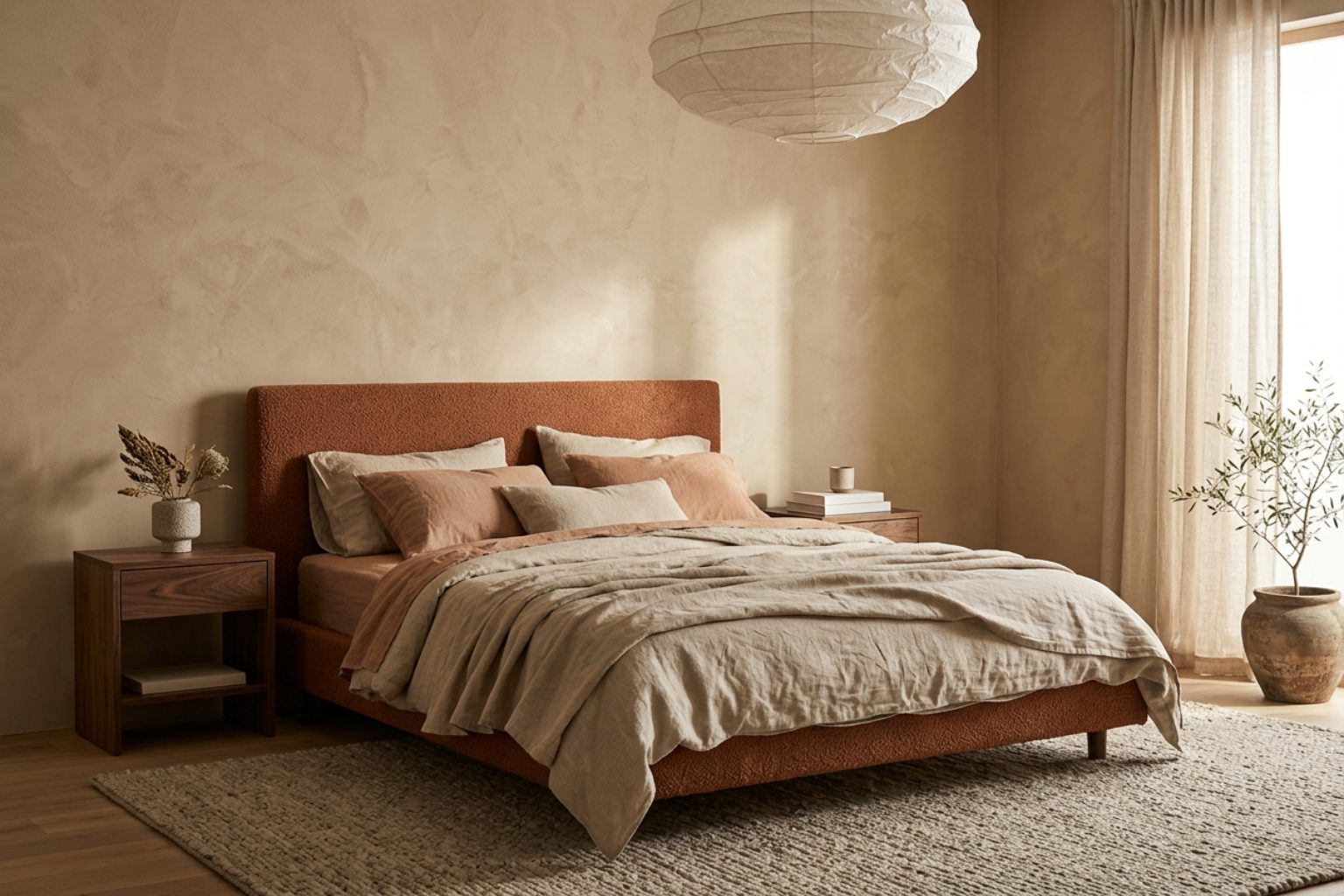
Cold grey and sterile white are giving way to a warmer palette: chocolate brown, terracotta, ochre, olive green and sandy shades. They make the space cosier and combine easily with wood and stone.
How to apply it: keep the base neutral (walls, floor, large furniture) and bring in earthy tones through upholstery, textiles, one accent sofa or wall. That way you can easily change the accent years later.
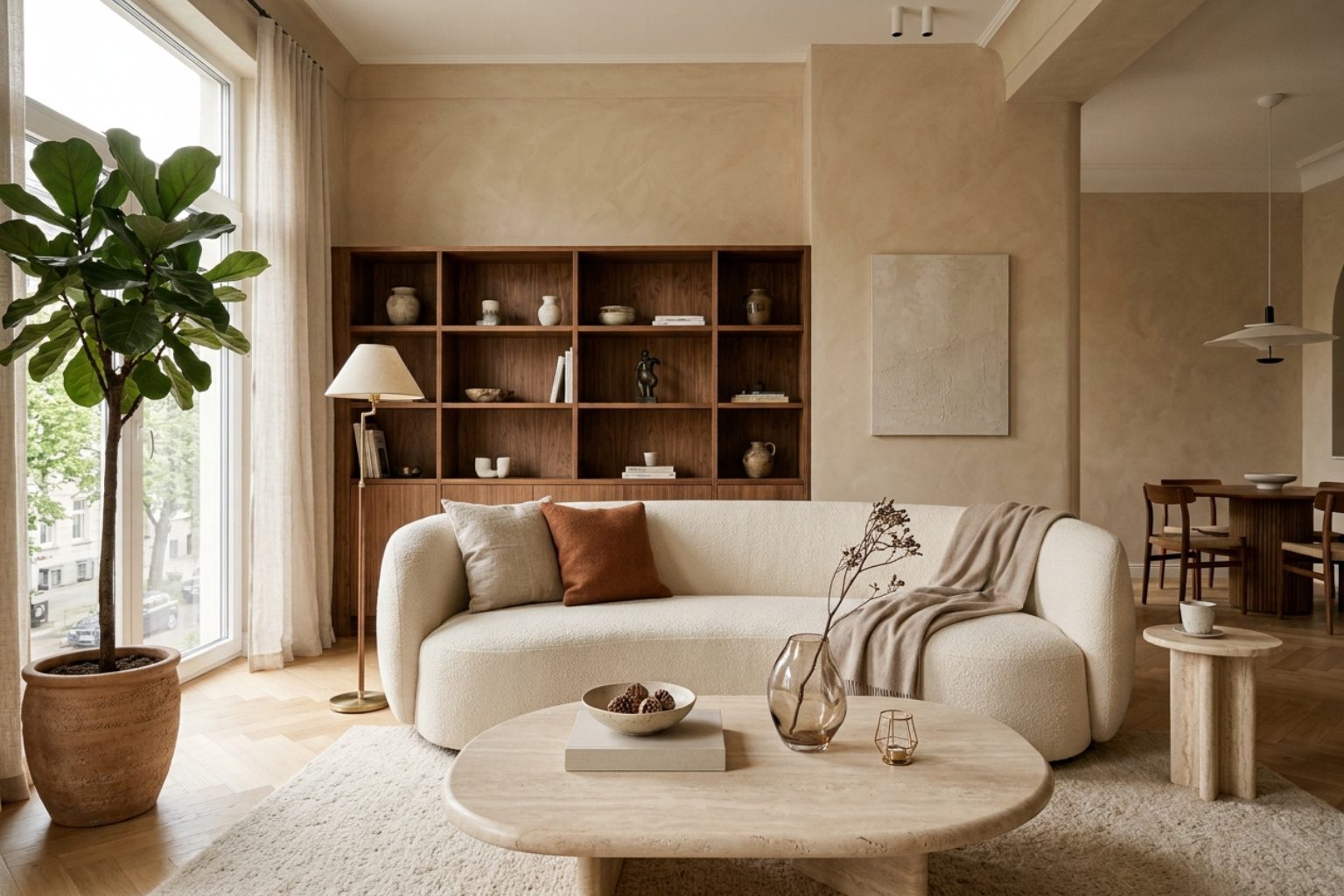
Rounded sofas, oval tables, arches and rounded furniture corners soften the straight lines of contemporary architecture. Curved shapes make movement through the space more natural and calm the eye.
How to apply it: one curved sofa or oval dining table is enough. An arch is a great solution for the transition between the hall and the living room or for a wall niche.
Travertine, boldly veined marble, solid wood with visible grain, linen, wool, bouclé, rattan. The trend is towards materials that “age beautifully” and invite touch.
How to apply it: combine 2–3 main materials throughout the home – for example oak, travertine and linen. More than that makes the interior restless.
The kitchen island becomes a central sculptural element – a monolithic block of boldly veined stone or with curved edges. The stone “flows” from the top down the sides without visible joints.
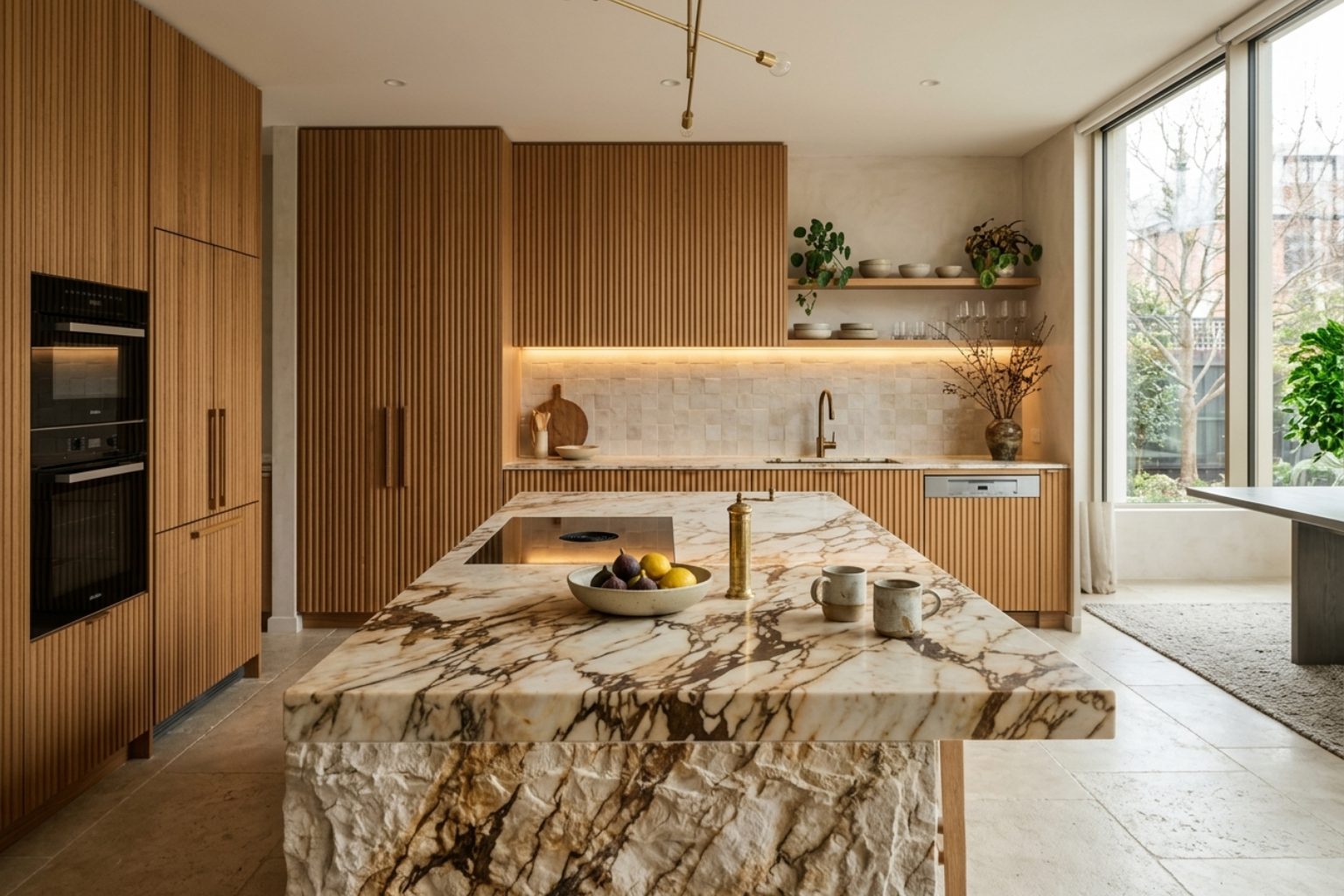
If you are considering an island, read also how to design the kitchen as a whole and what a custom kitchen.
A single chandelier in the centre of the room is a thing of the past. In 2027 lighting is planned on three levels: ambient (hidden LED lines, recessed spotlights), task (over the worktop, desk, mirror) and accent (wall lamps, backlit niches and display cabinets).
How to apply it: lighting is decided at the design stage, because the cables are laid during the rough works. Think about dimming too – the same room looks completely different in the morning and the evening.
Floor-to-ceiling wardrobes, TV walls with hidden storage, wall niches, handleless fronts. The aim is for the home to look tidy without showing where things are.
This is the strength of custom furniture – it uses every centimetre and looks like part of the architecture.
Lime plaster, clay finishes, microcement, wooden slats and relief panels are replacing smooth paint and wallpaper. Texture catches the light and adds depth even to a minimalist interior.
The “catalogue” interior is losing its appeal. People want their home to tell their story – through art, books, objects from travels, a vintage piece or a family heirloom woven into the new interior.
How to apply it: leave space for these objects in the design – a niche, a shelf, a wall for a lit painting. That way they look planned, not placed at random.
The bathroom is becoming a place to relax: step-free showers, large-format tiles or stone, backlit built-in niches, warm wood and a soft lighting scene. You will find more ideas on the page for bathroom interior design.
More and more clients think long-term: quality materials that don't need replacing every few years, energy-efficient lighting and smart systems you can't see – controlling lighting, blinds and climate from your phone, hidden in ordinary switches.
“Trends are a good source of ideas, but the best interior is the one that resembles you.” – Arch. Katerina Taneva
If you want to see how these ideas look in real homes, explore DOMO's projects or read how we work from the first meeting to moving in.
Warm earthy tones – chocolate brown, terracotta, ochre, olive green and sandy shades, combined with a neutral base in beige and cream.
Cold grey is giving way to warmer neutrals. Grey can stay, but in a warmer shade and combined with wood and textiles.
Natural materials, built-in custom furniture, layered lighting and a neutral base. They are principles of good design rather than fashion.
Change the textiles, lights and décor, add a textured wall or one accent piece of furniture. These are the quickest changes with the biggest effect.
Want a home that still looks current years from now? Let's design it together.
Book a consultation
 Trends · 4 min read5 interior trends that stay in 2027 – and how to use them wisely
Not all trends disappear after a year. Five of them have taken hold and remain current in 2027: warm minimalism, open-plan space with clear…
Read →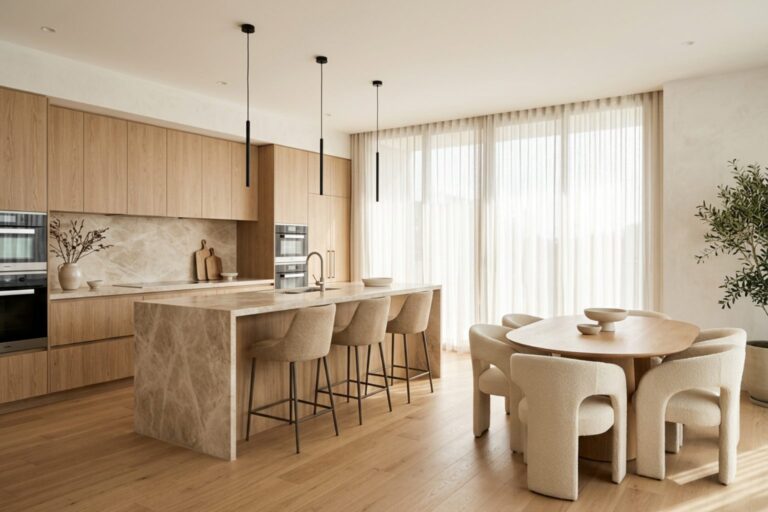 Renovation · 6 min readApartment renovation: the right order of stages – from design to moving in
The right order for an apartment renovation is: design → demolition → installations (electrical, plumbing, air conditioning) → plastering and screeds → bathroom and kitchen tiling →…
Read →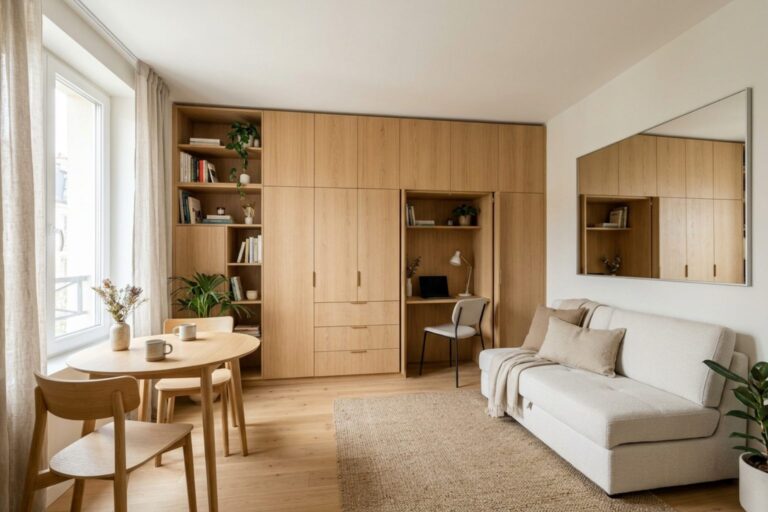 Tips · 4 min readSmall apartment: 10 solutions that make it feel more spacious
A small apartment looks bigger when it is tidy, bright and visually calm. The most effective solutions are: a light, unified palette, built-in…
Read →